
 EN
EN
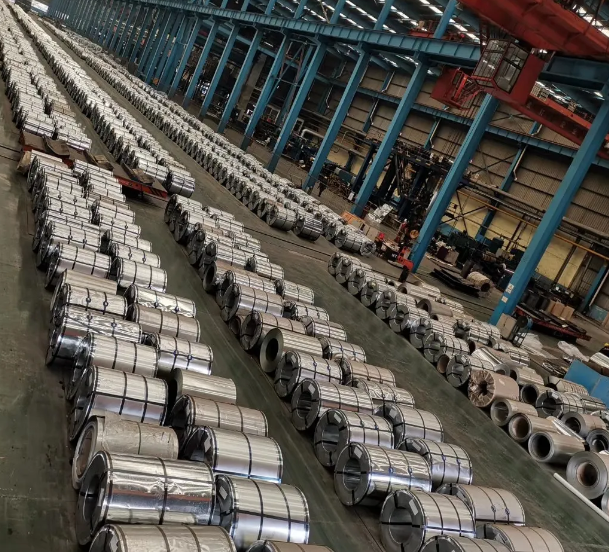
If you work in manufacturing or construction, you’ve probably heard the term hot rolled steel coil thrown around. But what makes it such a popular choice for so many projects? When you’re shaping metal into something useful, whether it’s a big structural beam for a building or a part for a machine, the material you start with really matters. Hot rolled steel is a workhorse in the industry, and for good reason. It’s the go-to for a huge range of fabrication jobs because it brings some serious advantages to the table. Let's break down why this material is so widely used and what makes it a smart pick for your next project.
Easy to Shape and Form
The biggest advantage of hot rolled steel coil is right there in its name: it's rolled while it's hot. During production, the steel is heated up above its recrystallization temperature, which for steel is really, really hot. When the metal is in this state, it becomes incredibly malleable and easy to work with. Think of it like forging a piece of metal in a blacksmith’s forge; the heat makes it soft and bendable. This high temperature process means the steel can be squeezed and shaped into large, complex forms without a lot of extra force. For someone doing fabrication, this characteristic carries over. This material is generally easier to cut, bend, and shape further compared to its cold rolled cousin. It doesn't have the same level of internal stress, so it behaves more predictably when you're welding or forming it. That’s why you see it used as the starting point for so many other products, from the big I-beams and channels that Xinlongteng supplies, right down to the raw material for further processing. It simply cooperates.
Cost Effective for Big Projects
Let's talk money, because in any fabrication project, the budget is a big deal. Hot rolled steel is typically more affordable than cold rolled steel. Why? The manufacturing process is simpler and faster. There are fewer steps involved since the steel is shaped while hot and then left to cool naturally. This cooling process means the final dimensions aren't held to the same ultra-tight tolerances as cold rolled steel, but for a vast number of applications, that's perfectly fine. You're paying for the strength and the material, not for a perfect surface finish or micrometer precision. For large scale structural work, like the bridges, building frames, and infrastructure projects mentioned on the Xinlongteng site, this cost effectiveness is a huge draw. You get reliable, strong steel that meets international standards like ASTM or EN, without paying a premium for cosmetic perfection. It’s about getting the best value for the essential, load bearing parts of your project.
Comes with a Helpful Scale
One characteristic of hot rolled steel that might seem like a downside at first is the scaly finish it has. When the steel cools down from that extreme heat, it forms a greyish-blue layer of scale on the surface. Now, if you're making something that needs to look pretty right out of the gate, that scale needs to be removed, usually by grinding, sandblasting, or pickling. But here's the thing: for a huge amount of fabrication work, that scale isn't a problem. In fact, it can act as a sort of protective layer during transport and storage. More importantly, for structural applications where the steel will be painted or coated later, or where it's embedded in concrete, the scale is a non-issue. The key is knowing that the material underneath is solid and reliable. Suppliers like Xinlongteng ensure that the base metal, the hot rolled steel coil itself, has consistent thickness and the right mechanical properties, which is what really counts when that beam or column is holding up a structure.
A Foundation for Further Processing
Finally, one of the coolest things about hot rolled steel coil is its versatility as a starting point. It's not always the final product; it's often the beginning of something else. That big coil of hot rolled steel can be unrolled and sent through more processes. It can be cold rolled to make it thinner, stronger, and give it a better surface finish for things like car panels or appliances. It can be pickled and oiled to remove the scale and prepare it for precise stamping or forming. It can be slit into narrower strips or cut into sheets. So, when a company specializes in providing hot rolled steel coil, like Xinlongteng does alongside their other products, they are providing the fundamental building block for countless items in industries ranging from automotive to machinery manufacturing. It's the starting point in a long chain of creation, proving its value not just as a material, but as the foundation for innovation in fabrication.