Angle steel, H-beam, channel steel, steel wire and sheet piles all belong to commonly used steel products. The first three are typical section steels (long steel bars with specific cross-sections), steel wire is a deep-processed product of wire rods, and sheet piles are special functional steel products. The classification core focuses on cross-section specifications, production processes, material properties and application scenarios, and is suitable for different fields such as construction, machinery and infrastructure. The specific classification introduction is as follows:
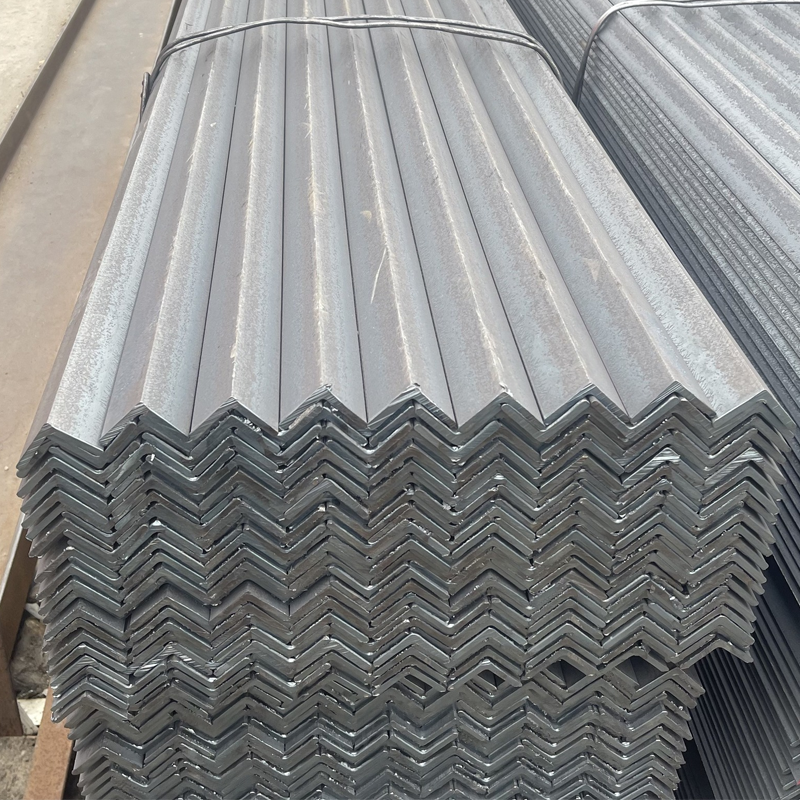
Angle steel
Angle steel, also known as Angle iron, is a long steel bar with an L-shaped cross-section. The lengths of the two sides can be equal or unequal. It features a stable structure and is easy to weld. Classification focuses on cross-sectional form, material, and precision:
Classify by cross-sectional form
Equal Angle steel: The widths of the two sides are equal, such as ∠50×50×5 (side width 50mm, side thickness 5mm). It is the most widely used type and is commonly used in steel structure frames, supports, shelves, guardrails, etc.
Unequal Angle steel: The widths of the two sides are different, such as ∠75×50×6 (the long side is 75mm wide, the short side is 50mm wide, and the side thickness is 6mm). It has strong adaptability to scenarios with unbalanced forces and is often used for the connection of primary and secondary structures, special supports, mechanical bases, etc.
Classified by material
Carbon structural steel Angle steel: The main grades are Q235 and Q355, with low carbon content, high cost performance and good processing performance, covering most common scenarios such as construction and general machinery.
Low alloy high strength Angle steel: With the addition of alloying elements such as manganese and silicon, its strength is higher than that of ordinary carbon steel Angle steel, and it has better toughness and weather resistance. It is used in high-rise buildings, Bridges, heavy machinery and other structures with high strength requirements.
Stainless steel Angle steel: The materials are mostly 304, 316, etc. It has strong corrosion resistance and is used in corrosive environments such as chemical equipment, food machinery, and buildings in coastal areas.
Classified by precision
Ordinary precision Angle steel: It has a relatively large dimensional tolerance, allows a small amount of oxide scale on the surface, meets the requirements of general structural components, and has a relatively low cost.
High-precision Angle steel: Through precise rolling processing, it has small dimensional deviations and a smooth surface, and is used for mechanical parts and precision equipment brackets with high assembly accuracy requirements.
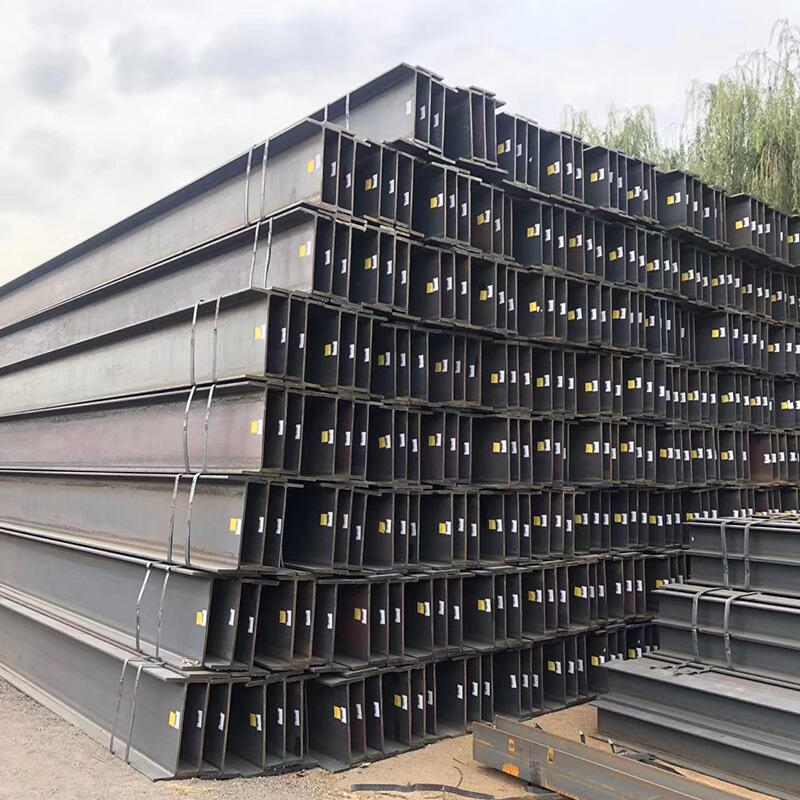
H steel
H-shaped steel is a highly efficient section with an H-shaped cross-section, composed of web plates and upper and lower flange plates. It features high bending strength, high section utilization rate and good welding performance. Its classification is centered on production process, material and application.
Classified by production process
Welded H-shaped steel: It is formed by welding and joining three steel plates (web plates + two flange plates) together. It can be customized to any specification as needed, with strong flexibility. It is suitable for large-span and special-sized steel structures, such as factory steel beams and main beams of Bridges.
Rolled H steel: Formed through a dedicated rolling mill in one piece, it features high production efficiency, uniform cross-sectional dimensions, stable mechanical properties, and is a standardized mass production product. It is widely used in building frames, equipment bases, container skeletons, etc.
Classified by material
Carbon structural steel H steel: represented by Q235 and Q355, it is suitable for common scenarios such as ordinary buildings and general machinery, with outstanding cost performance.
Alloy structural steel H steel: Containing alloying elements such as chromium and molybdenum, it is resistant to high temperatures and has high strength. It is used in special scenarios such as high-temperature equipment supports, main beams of heavy machinery, and nuclear power facilities.
Weathering steel H steel, such as Q355NH, has excellent resistance to atmospheric corrosion and does not require additional coating. It is used for long-term outdoor service steel structures, such as Bridges and open-air factories.
Classified by use
Structural H-shaped steel: It is used in building frames, floor beams, columns, bridge trusses, etc., and undertakes the main load-bearing function.
H-shaped steel for machinery: It is used for heavy machinery bases, equipment frames, drive shaft supports, etc., and needs to have good mechanical stability.
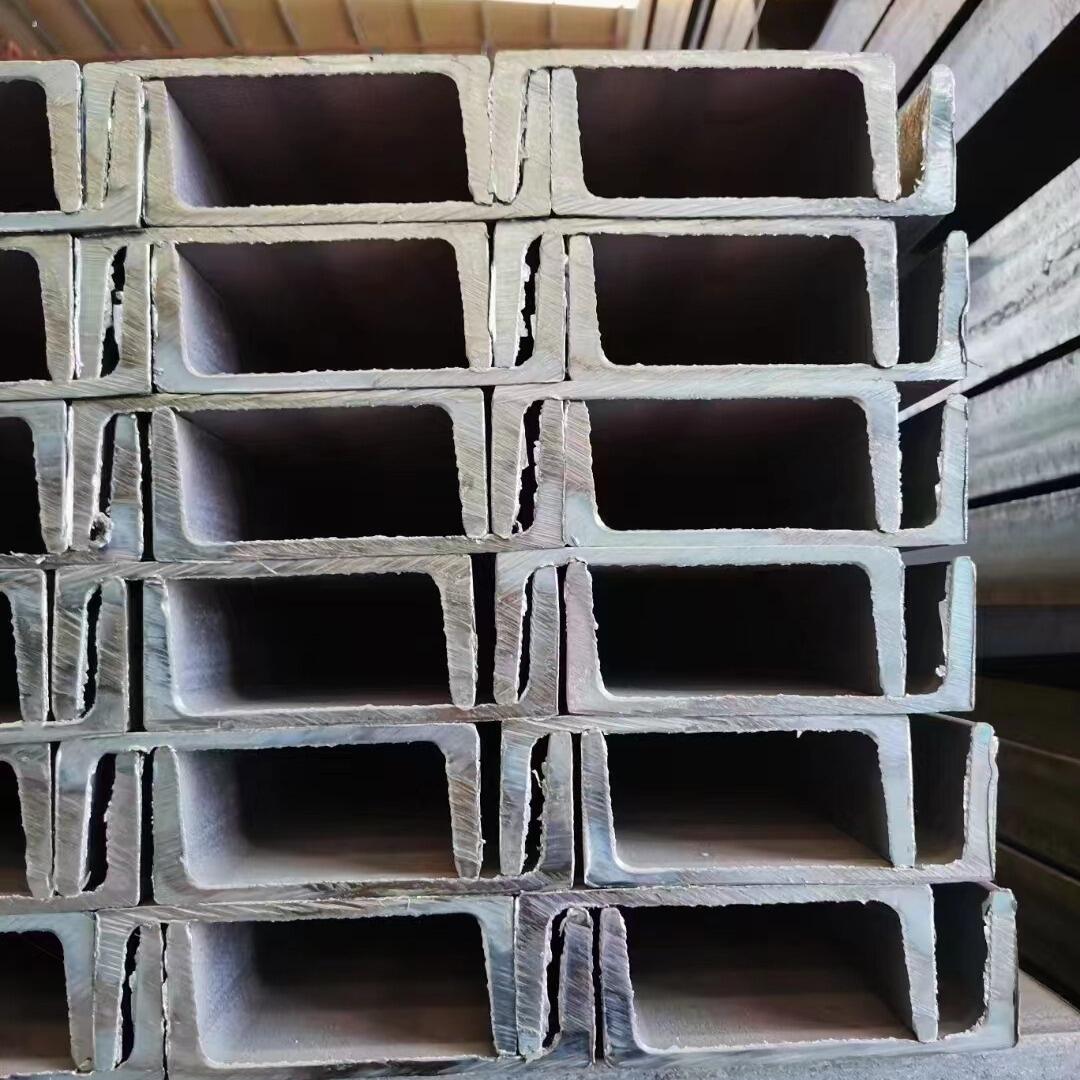
Channel steel
Channel steel is a long steel bar with a cross-section in the shape of a groove (U), open on one side, and has good bending and torsional resistance. Its classification is similar to that of Angle steel, with the core focusing on cross-sectional specifications, materials, and precision:
Classify by cross-sectional specifications
Common channel steel: With a wide range of specifications (such as 5# - 40#, the numbers represent the height of the channel steel, unit mm), it is suitable for general building supports, equipment guide rails, container bottom beams, etc.
Light channel steel: It has a relatively thin wall thickness, is lightweight, and its strength meets the requirements of light loads. It is used for furniture frames, decorative structures, and light equipment supports, etc., taking into account both economy and lightweight.
Classified by material
Carbon steel channel steel: The mainstream grades are Q235 and Q355. It features low cost and good processability, and is a commonly used type in civil buildings and general machinery.
Stainless steel channel steel: It has strong corrosion resistance and is used for chemical pipeline supports, food processing equipment, decorative structures in coastal areas, etc.
Low alloy channel steel: It has superior strength and toughness compared to ordinary carbon steel channel steel and is used in high-rise buildings, bridge ancillary structures, heavy equipment guide rails, etc.
Classified by precision
Ordinary precision channel steel: With loose dimensional tolerances and a slight oxide scale on the surface, it is suitable for structural components with low precision requirements.
Precision channel steel: With precise dimensions and a smooth surface, it is used in scenarios where strict assembly is required, such as precision equipment guide rails and mechanical transmission components.
Steel wire
Steel wire is a long and thin steel material processed from wire rods (wire rods) through drawing, heat treatment and other processes. It has a small diameter and high strength. The classification focuses on processing techniques, materials and applications, with extremely wide application scenarios:
Classified by processing technology
Cold-drawn steel wire: Formed by drawing at room temperature, with a smooth surface, high dimensional accuracy, high strength and hardness, it is used for springs, steel wire ropes, fasteners, etc.
Hot-drawn steel wire: After heating and drawing, it has good ductility and strong toughness, and is suitable for scenarios with high plasticity requirements, such as welding electrodes and mechanical parts blanks.
Galvanized steel wire: With surface galvanization treatment, it has strong corrosion resistance and is used for greenhouse frames, guardrail nets, steel wire ropes, construction binding, etc.
Annealed steel wire: After drawing, it undergoes annealing treatment to reduce hardness and enhance toughness, facilitating subsequent bending and welding. It is used in the processing of hardware accessories and handicrafts, etc.
Classified by material
Carbon steel wire: Depending on the carbon content, it is classified into low-carbon steel wire (with good toughness, used for binding and weaving), medium-carbon steel wire (with moderate strength, used for springs and fasteners), and high-carbon steel wire (with high hardness, used for cutting tools and high-strength steel wire ropes).
Alloy steel wire: With elements such as manganese, chromium and nickel added, like spring steel wire and stainless steel wire, it has special properties and is used in precision springs, medical devices, corrosion-resistant components, etc.
Classified by use
Structural steel wires: such as steel wires for steel wire ropes and construction binding steel wires, they are responsible for load-bearing or fixing functions.
Functional steel wires: such as spring steel wires, welding steel wires, and ultra-fine steel wires for electronic components, suitable for specific functional requirements.
Steel sheet pile
Steel sheet piles are a type of plate-shaped steel with interlocking edges. They can be joined together through interlocking to form continuous soil and water retaining structures. Their core advantages are convenient construction and reusability. Classification is based on cross-sectional shape, material, and production process:
Classify by cross-sectional shape
U-shaped steel sheet piles: Their cross-section is U-shaped, with interlocking units located on both sides. They have low resistance to soil penetration and excellent waterproof performance. They are the most widely used type and are applied in foundation pit support, river cofferdams, and wharf revetment, etc.
Z-shaped sheet piles: With a Z-shaped cross-section and high bending strength, they are suitable for deep foundation pits and heavy retaining structures, such as foundation pits of high-rise buildings and tunnel entrance support.
Straight web sheet piles: The web is a straight plate, with a stable structure and strong load-bearing capacity. They are used in long-term service scenarios such as permanent retaining walls, port terminals, and flood control embankments.
H-shaped steel sheet piles: Combining the bending resistance of H-shaped steel and the locking function of steel sheet piles, they are used in ultra-deep foundation pits and heavy support projects, such as bridge foundation pits.
Classified by material
Carbon steel sheet piles: Made from low alloy high strength steels such as Q355, they feature high strength and moderate cost, and are widely used in most temporary and permanent support projects.
Galvanized steel sheet piles: With surface galvanization treatment, their corrosion resistance is enhanced and they can be reused more times. They are used in support projects in humid environments or coastal areas.
Stainless steel sheet piles: They have extremely strong corrosion resistance and are used as soil and water retaining structures in highly corrosive environments such as chemical industrial parks and sewage treatment plants.
Classified by production process
Hot-rolled steel sheet piles: Formed by one-piece hot-rolling, with high locking precision and stable mechanical properties, they are mainstream products and suitable for most engineering scenarios.
Cold-formed steel sheet piles: Processed and formed through cold-bending technology, they feature high production efficiency and relatively low cost. They are suitable for small and medium-sized temporary support projects, such as small foundation pits and temporary enclosures.

Shandong XINLONGTENG Metal Manufacturing Co., Ltd. was founded in 2020 and is headquartered in Shandong Province, China—a national hub for steel production and industrial manufacturing.
 EN
EN