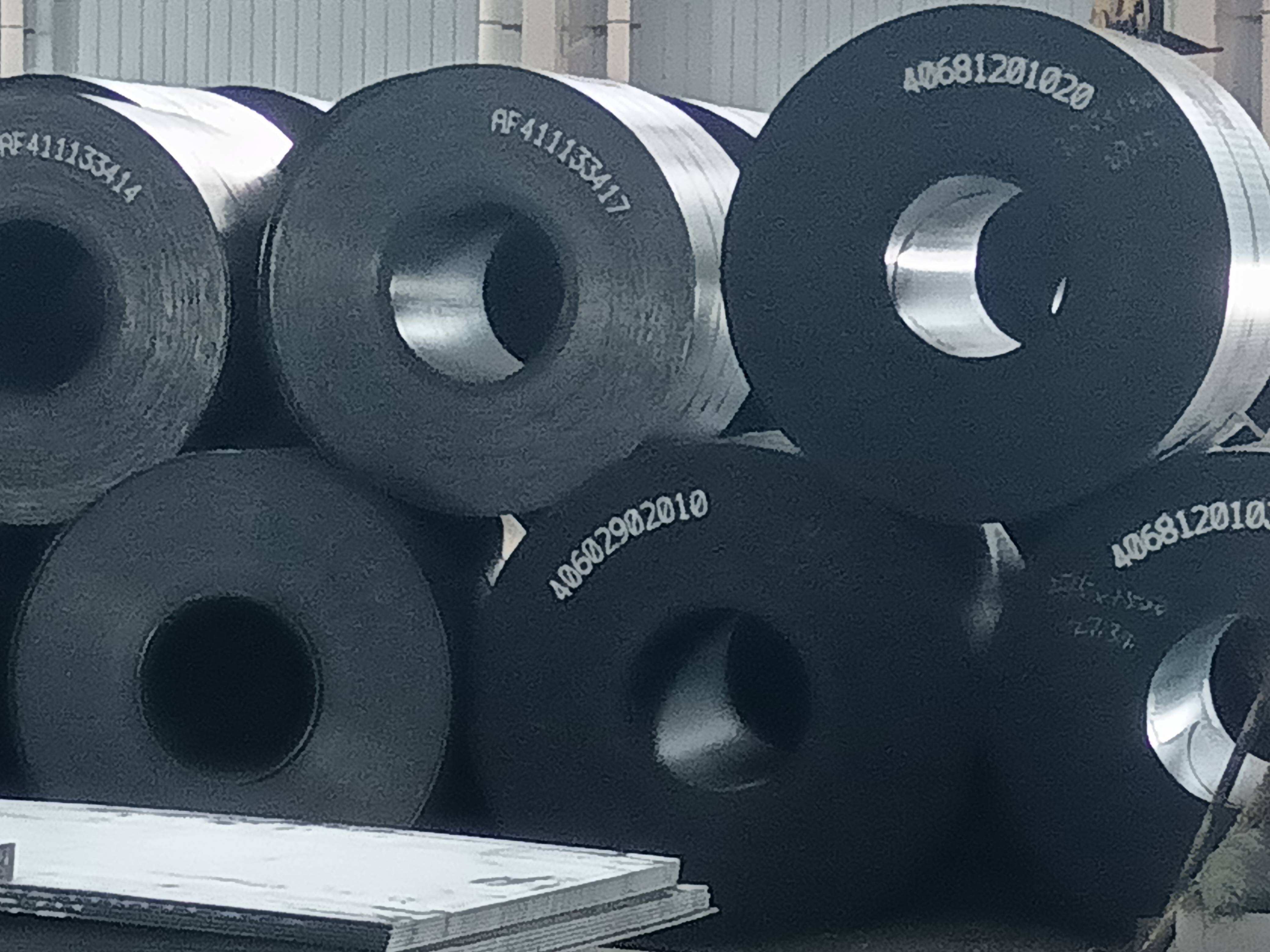
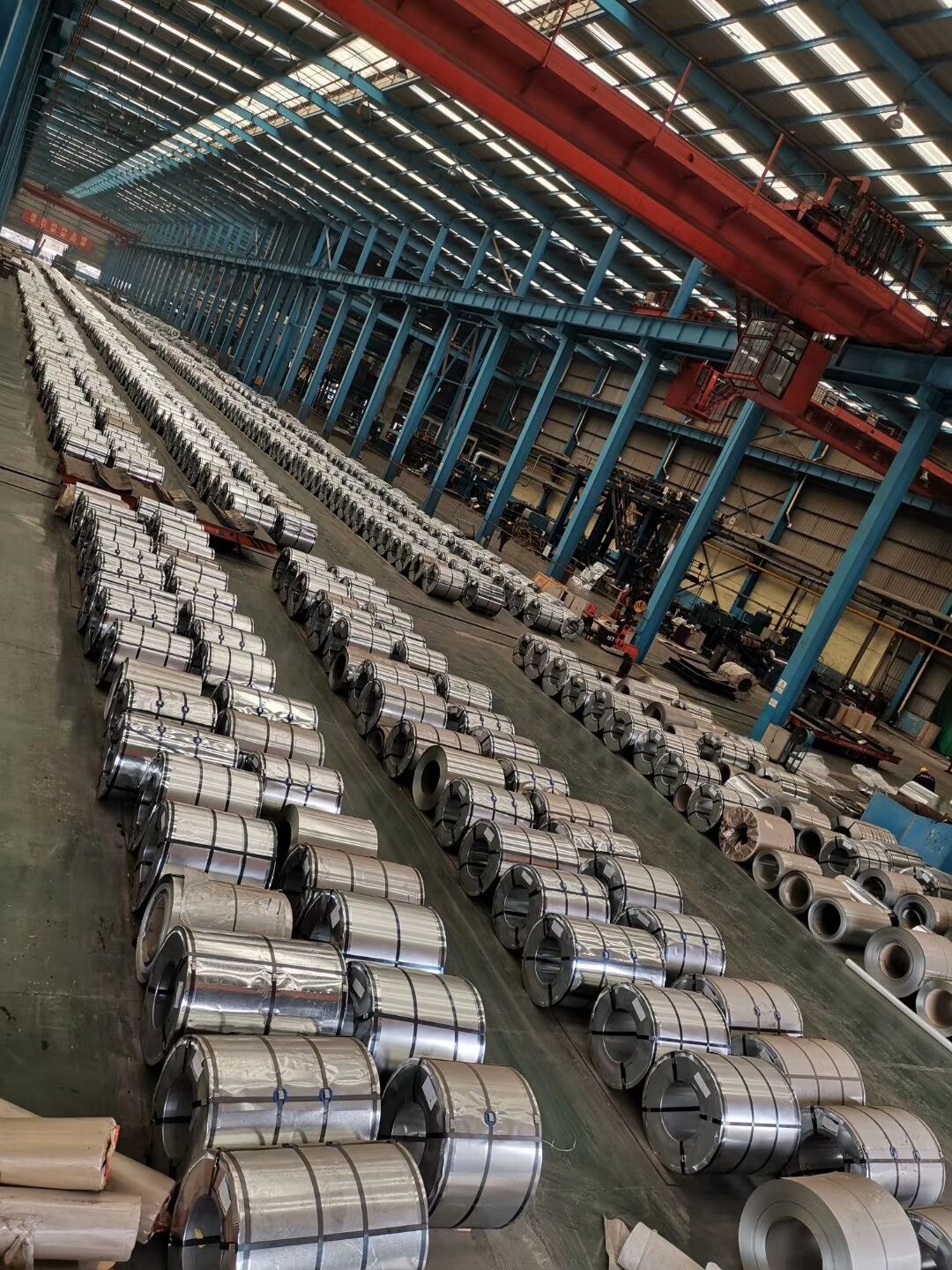
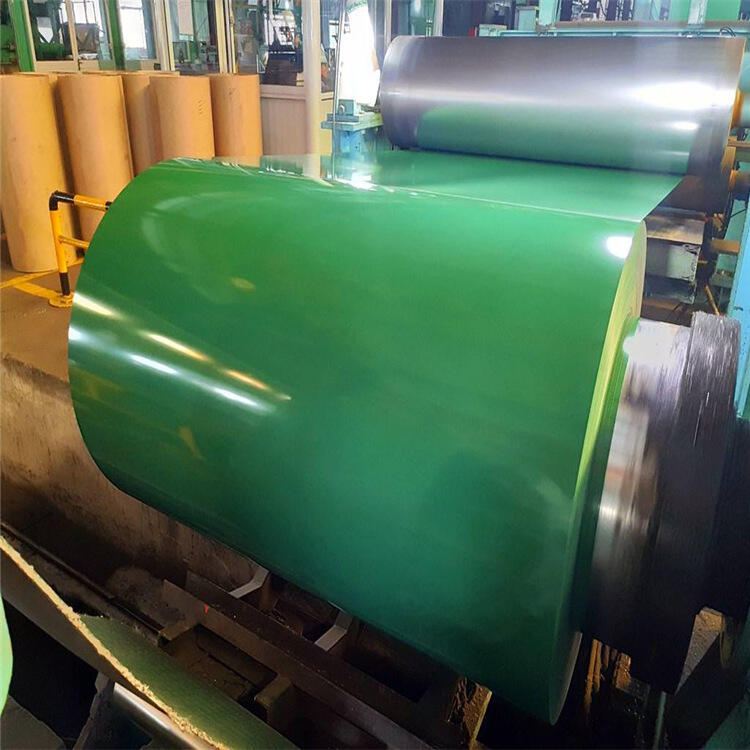
Carbon steel coils, galvanized coils and color-coated coils are three highly representative types of coil materials in steel processing. There is a clear base material relationship among the three (galvanized coils use carbon steel coils as the base material, while color-coated coils mostly use galvanized coils as the base material). The classification logic revolves around production processes, material properties, surface conditions and application scenarios, adapting to different industrial needs. The specific classification introduction is as follows:
Carbon steel coil
Carbon steel coil is a type of coil material made from carbon steel through continuous rolling and winding. It is the most fundamental steel coil material and can be directly processed or used as the original base material for galvanized coils and color-coated coils. The classification focuses on carbon content and production processes.
Classified by carbon content
Low-carbon steel coil: Carbon content ≤0.25%, common grades include Q195, Q235, SPHC, etc. It has good toughness, excellent weldability, low processing difficulty and an affordable price. It is the most widely used type of carbon steel coil and is often used in stamping parts, steel structural parts, welded parts, etc.
Medium carbon steel coil: Carbon content 0.25%-0.6%, grade such as No. 45 steel coil. Its strength and hardness are higher than those of low-carbon steel coils, but its toughness and weldability are slightly inferior. It needs to be heat-treated to improve its performance and is mostly used in gears, shafts, connecting rods and other load-bearing parts in mechanical manufacturing.
High-carbon steel coil: Carbon content > 0.6%, grade such as No. 65 steel coil. It has high hardness and strong wear resistance, but poor plasticity and is prone to cracking. It is difficult to weld and is mainly used to make products with extremely high hardness requirements such as springs, cutting tools and steel wire ropes.
Classified by production process
Hot-rolled carbon steel coil: The billet is heated to a high temperature before rolling, featuring high production efficiency and low cost. It has an oxide scale on the surface, average dimensional accuracy, good ductility and toughness, and is suitable for structural components that can withstand impact loads. It is widely used in buildings, Bridges, mechanical bases, etc.
Cold-rolled carbon steel coil: It is made by rolling hot-rolled carbon steel coil as the base material at room temperature. The surface is smooth and flat, with small dimensional tolerances, uniform thickness, and higher hardness and strength. It is suitable for scenarios with high requirements for appearance and precision, such as automotive interior parts, home appliance shells, and precision instrument accessories.
Galvanized coil
Galvanized coil is a type of coil material that uses carbon steel coil (cold-rolled or hot-rolled) as the base material and forms a zinc layer on the surface through the galvanizing process. Its core value lies in enhancing corrosion resistance. The classification is mainly based on the galvanizing process and surface condition
Classified by galvanizing process
Hot-dip galvanized coil: Carbon steel coils are immersed in molten zinc to form a uniform zinc layer on the surface. The zinc coating is thick (usually over 80g/㎡), has strong adhesion, excellent corrosion resistance and wear resistance, a long service life, and a relatively moderate cost. It is the first choice for outdoor scenarios and is often used in guardrails, steel structure factories, car chassis, agricultural machinery, etc.
Electro-galvanized coil: Through electrolysis, zinc ions are deposited on the surface of carbon steel coils to form a zinc layer. The zinc coating is thin and dense (usually 10-50g /㎡), with a high surface finish and good dimensional accuracy. Its corrosion resistance is slightly inferior to that of hot-dip galvanized coils, but it has an attractive appearance and is suitable for subsequent coating processing. It is widely used in home appliance shells, electronic equipment accessories, food packaging auxiliary parts, etc.
Classify by surface condition
Ordinary zinc flower coil: Zinc flowers formed by natural cooling after galvanizing have clear surface patterns and relatively low cost. It is suitable for outdoor structural components with low appearance requirements.
Small zinc flower coils: By controlling the cooling rate to form fine zinc flowers, the surface is flatter and the adhesion of subsequent coating is better. They are often used for household appliances and automotive parts that require painting.
Zinc-free flower coil: After special treatment to eliminate zinc flowers, the surface is smooth and uniform, suitable for scenarios with extremely high appearance requirements, such as high-end home appliance shells, decorative panels, etc.
Color-coated coil
Color-coated steel coil is a type of coil material made from galvanized steel coil (the mainstream) or cold-rolled carbon steel coil as the base material, which undergoes surface pretreatment, coating with colored paint (or film), and curing. It combines both decorative and protective functions. The classification mainly focuses on base material type, coating process, and surface characteristics:
Classified by base material
Galvanized base plate color-coated coil: Using hot-dip galvanized coil or electro-galvanized coil as the base material, it combines the corrosion resistance of the zinc layer and the decorative effect of the coating. It is currently the most widely used type of color-coated coil and is suitable for building exterior walls, roofs, billboards, etc.
Cold-rolled base plate color-coated coil: Using cold-rolled carbon steel coil as the base material, it has a relatively low cost, but its corrosion resistance depends on the coating. It is only suitable for indoor dry environments, such as indoor partitions and furniture panels.
Aluminized zinc base plate color-coated coil: With aluminized zinc coil as the base material, it has better corrosion resistance and high-temperature resistance than ordinary galvanized base plates, and is often used in building facilities in high-temperature environments or highly corrosive areas.
Classified by coating process
Roller-coated color-coated coil: The coating is evenly applied to the surface of the base material through a roller-coating machine. The coating thickness is uniform, the adhesion is strong, and the production efficiency is high. It is the mainstream production process of color-coated coils and is suitable for large-scale industrial production.
Spray-coated color-coated coil: It is coated with paint by spraying, suitable for irregular substrates or small-batch production. The coating texture is rich, but its uniformity is slightly inferior to that of roller coating. Its application scenarios are relatively niche.
Classify by surface characteristics
Ordinary coated color-coated coil: The surface is pure color (such as white, blue, red, etc.), and the coating thickness is conventional, suitable for general architectural decoration.
Embossed color-coated coil: After coating, patterns (such as wood grain, stone grain) are formed through embossing technology, which combines decorative and anti-slip properties. It is often used for exterior wall decoration, ceilings, door panels, etc.
High-gloss/matte coated rolls: High-gloss rolls have a high surface gloss and a bright visual effect. The matte roll has a soft and non-reflective surface, making it suitable for scenarios sensitive to light, such as interior decoration and shopping mall decoration.

Shandong XINLONGTENG Metal Manufacturing Co., Ltd. was founded in 2020 and is headquartered in Shandong Province, China—a national hub for steel production and industrial manufacturing.
 EN
EN