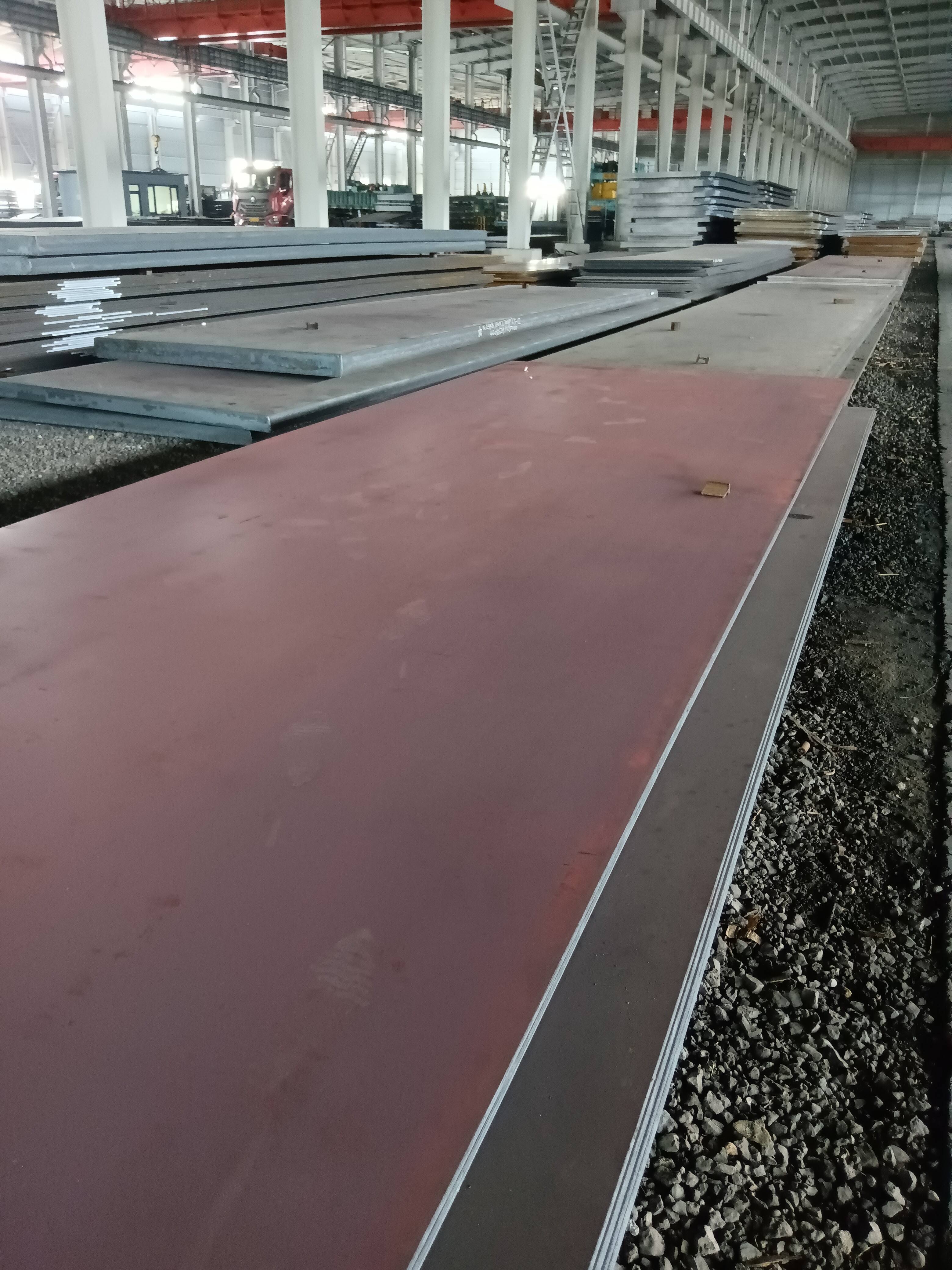
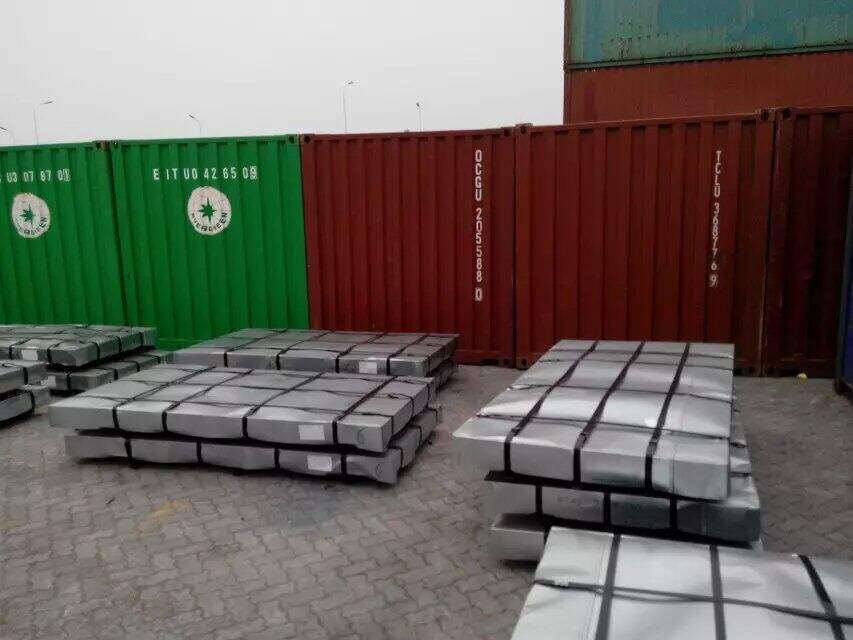
Carbon steel sheets and galvanized steel sheets are two types of steel sheets that are widely used in industrial production and daily life. They are closely related (galvanized steel sheets are mostly based on carbon steel sheets), but they differ significantly in material composition, performance characteristics, and applicable scenarios. The following is a detailed introduction from aspects such as core definitions, classifications, features, and applications:
Carbon steel plate
Carbon steel plate is a type of steel plate rolled from carbon steel. Its core components are iron and carbon, and it also contains small amounts of impurities such as manganese, silicon, sulfur and phosphorus. It does not contain deliberately added alloying elements (or the content of alloying elements is extremely low). It is affordable and has basic performance. It is the most fundamental and widely used type of steel plate.
Core classification
By carbon content, they can be classified into low-carbon steel plates (carbon content ≤0.25%, such as Q195, Q235), medium carbon steel plates (carbon content 0.25%-0.6%, such as No. 45 steel), and high carbon steel plates (carbon content > 0.6%, such as No. 65 steel). The higher the carbon content, the higher the hardness and strength of the steel plate, but the poorer its toughness and weldability.
According to the production process, it includes hot-rolled carbon steel plates and cold-rolled carbon steel plates. Hot-rolled plates have an oxide scale on the surface and relatively low precision, but they have good ductility and low cost. Cold-rolled steel plates have a smooth surface, precise dimensions, and higher hardness, making them suitable for scenarios with high requirements for appearance and precision.
Core features: The advantages are that it is easy to obtain materials, inexpensive, and has good processing performance. It can be processed in various ways such as cutting, welding, bending, and stamping. Low-carbon steel plates have excellent toughness and weldability, while medium and high-carbon steel plates have high strength and good wear resistance. The drawback is that it has extremely poor corrosion resistance and is prone to oxidation and rusting in damp and outdoor environments, requiring additional anti-rust treatment (such as painting or spraying).
Typical applications: Low-carbon steel plates are often used in building steel structures, mechanical supports, equipment bases, car frames, ordinary containers, etc. Medium carbon steel plates are used for mechanical parts, gears, shafts, connecting rods, etc. High-carbon steel plates are used in cutting tools, springs, wear-resistant liners, etc.
Galvanized sheet
Galvanized steel sheet is a type of steel sheet made by covering a layer of zinc on the surface of carbon steel sheet (cold-rolled sheet or hot-rolled sheet) through hot-dip galvanizing or electro-galvanizing processes. Its core function is to enhance the corrosion resistance of the base material and extend its service life through the zinc layer.
Core classification
By galvanizing process: Hot-dip galvanized sheet (steel coil immersed in molten zinc liquid, thick and uniform zinc layer, strong adhesion, excellent corrosion resistance); Electro-galvanized steel sheet (a thin and dense zinc layer is deposited through electrolysis, with a high surface finish and good precision, but its corrosion resistance is slightly inferior to that of hot-dip galvanized steel sheet).
By surface condition, it can be classified into ordinary zinc flower plates, small zinc flower plates, zinc-free flower plates, etc. Among them, the surface of zinc-free flower plates is flatter and more suitable for subsequent coating and film application processing.
Core features: The advantage is its strong corrosion resistance. The zinc coating can form a "sacrificial anode" for protection. Even if the zinc coating is partially damaged, it can still prevent the base material from rusting. It combines the basic strength and processability of carbon steel plates, and some galvanized sheets still retain a relatively good surface finish. The disadvantage is that the cost is higher than that of ordinary carbon steel plates. The zinc coating is prone to oxidation and failure in high-temperature environments. During welding, it is necessary to pay attention to protecting the zinc coating to avoid the generation of zinc smoke.
Typical applications: Hot-dip galvanized sheets are often used in outdoor facilities (such as guardrails, billboards, steel structure factories), car chassis, home appliance shells, agricultural machinery, etc. Electro-galvanized steel sheets are used in scenarios with high surface accuracy requirements, such as interior parts of household appliances, shells of electronic equipment, accessories of precision instruments, and auxiliary parts for food packaging.

 EN
EN