
 EN
EN
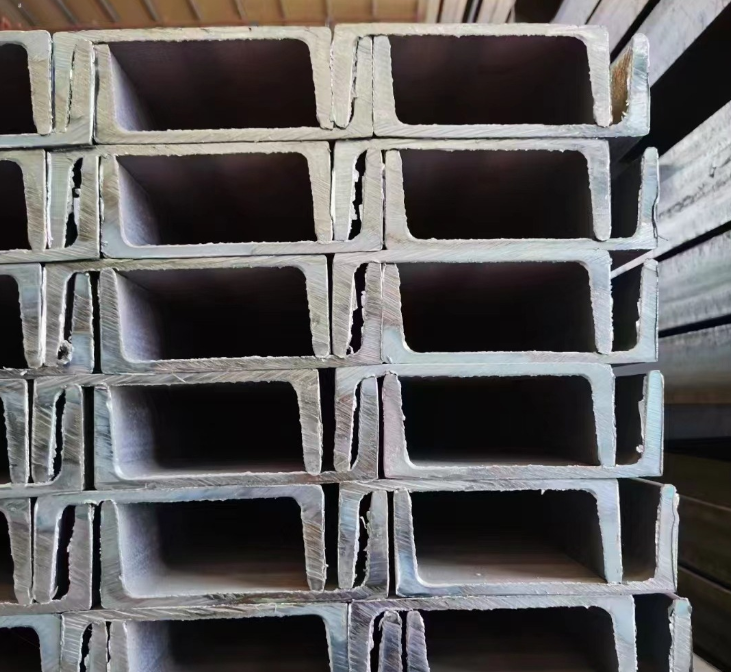
When you enter a large factory floor or warehouse, what catches your attention first? Is it the huge interiors where machinery and vehicles are unobstructed by supporting columns? Deep above your head concealing the columns is a layout of supporting steel beams. Many large structures use h beam steel, and for a good reason, h beam steel is strong and highly efficient.
The Unique Shape of H Beam
H beams are easier to work with for many reasons, and one of those is because of their unique shape. They look like the letter H when you look at their cross section. The web connects the two bevel flanges. This enhances the beam's strength and overall design. The bevel flanges allow for an efficient transfer of loads. Traditionally, flanges come in beam and girders, known as I beams, and they lack twist resistance and stiffness. H beams have greater resistance to this due to the bevel flanges. The way the products are made also ensures quality. Hot rolled h beam comes from the factory with strict standards, making for consistency and ready to use pieces for the builder. This reduces error and variation during construction, which can create extra work for builders.
Building the Main Frame with Portal Systems
When it comes to large structures, extra care is needed for the main support of the building. H beams are typically what is needed. Industrial construction usually involves what is referred to as a portal frame system, which is decidedly a rigid and more complex assembly of h section steel beams and columns as the main structural supports. Columns extend from the foundation to the frame at the top of the structure. The portal frame system provides support for the main structure, while also allowing the interior space to remain clear of structural supports to the frame system. This clear space allows for the incorporation of a production system. This is extremely beneficial for production facilities. Incorporating h beam into the design has the benefit of easier connection. Because the flanges are parallel, there is no need to work around uneven surfaces when connecting two beams, either by bolt or by weld. It might seem trivial, but this decreases the time needed to do this for an entire job site by hours. The crew is able to work more efficiently, and the final result is a structure that is stronger and straighter.
Managing Long Spans Without Middle Columns
One of the more challenging aspects of designing an industrial shed is managing long spans. A span refers to the distance between two supports. In many cases, a designer needs to prevent a roof from sagging in the middle, which greatly limits the distance between supports. With the help of h beam, supports and spans can be utilized in ways that are not possible with many other types of steel. For an industrial shed with a portal frame, clear spans without middle supports can be as long as 60 meters. Some systems are even capable of spans as long as 90 meters or more, given proper design. This is ideal for warehouse spaces, as it allows for high stacking of pallets and for concurrent forklift operations without interference from supports. The same applies to aircraft hangars, sports facilities, and large assembly plants. Since the wide flange helps slow beam deflection, the h beam resistance to bending helps the beam deflect only a little under the load of the roof, as well as the snow and overhead equipment. The web absorbs the shear forces pulling the beam apart and flexes to withstand the pulls. Therefore, h beam is used to fill those long horizontal spaces where other beams might crack.
Saving Costs Without Cutting Corners
There is a belief held by many that the use of heavy steel is costly. H beam, though it has a higher initial cost, brings with it many long term savings. The first point of savings is in the steel itself. In comparison to the I beam, h beams use 10% to 40% less steel while being able to handle the same loads. Consequently, less steel has to be bought and transported to the construction site. There is also savings in construction and labor. Because the h beam has a standard shape with both flanges parallel, the fabrication team can cut and weld shop bolts in much less time. Since the holes in the steel line up without needing extensive fitting, some systems can reduce on site assembly time by 20% compared to traditional methods. Faster construction means lower labor costs and earlier occupancy. Maintenance costs further prove that h beams save money. A properly built steel shed with the right coatings can last for more than fifty years with nearly no upkeep. Steel is sturdy and will not rot or be destroyed by pests like wood. Just keep the paint or galvanized coating in good shape, and the structure will last for a long time.
Weathering the Storm and Staying Safe
Industrial sheds get a lot of exposure to the elements. High winds, heavy snow, rain, even earthquakes can test the limits of buildings. H beam steel structures have performed the best in weathering all of these challenges. The rigid portal frame is extremely resistant to lateral force, so it is unlikely to tip over or collapse sideways. In seismic zones, steel buildings with h beam frames perform especially well. Steel has good plasticity, meaning the structure can bend a little without breaking. This allows the building to sway with ground motion instead of cracking apart. Statistics show that during serious seismic activity, steel frame buildings suffer the least damage compared to other construction types. Fire and corrosion should always be kept in mind. Most h beams used in industrial construction have protective coatings. Opting for a hot dip galvanizing coating creates a thick, robust layer that resists rust even in humid environments. For extra protection in extreme conditions, special fireproofing paints or intumescent coatings can be used, which swell when heated to insulate the steel.
Maximizing Floor Space and Design Flexibility
One benefit of h beams in the construction of industrial buildings that is often overlooked is their impact on the actual usable space inside. H beams allow for narrower columns, and therefore less usable space is taken away. This is opposed to the space taken up by concrete columns of the same strength. It may not seem like a lot of space saved on one column, but when every column in a factory uses h beams, the total saved space becomes significant. Research has shown that steel frame buildings can increase effective usable space by 4% to 6% compared to similar sized concrete frame buildings. That extra space can make a significant impact on a business, often being the difference between needing to build a new addition or simply adding more shelving within the same building. Another advantage is the design flexibility of h beam frames. Mezzanines, overhead cranes, or conveyor systems can be added later. The structure can handle the extra weight without major modifications. This future proofing is valuable because business needs can change over time, and no one wants to be stuck with an inflexible building.
The Practical Choice for Heavy Duty Jobs
After examining h beam, it is easy to see why so many builders and engineers choose h beam for their large industrial sheds. It is strong, cost effective, and practical. Heavy roofs and strong supports become affordable with h beam. An open floor plan and an efficient design can be created with saved steel that supports heavy industrial activities. Construction time is reduced because of the parallel flanges. Manufacturers see these benefits daily. H beam is the material of choice for factories, warehouses, and distribution centers. Whether it is a small workshop or a massive logistics hub, h beam delivers proven performance. The savings and reliability are reasons enough to keep using h beam for many years to come.