
 EN
EN
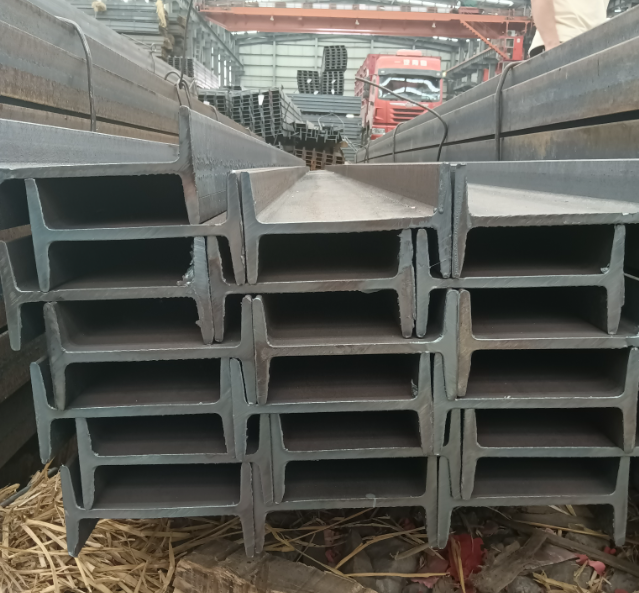
If you have seen a building being constructed, you may have seen the first steel framework that goes in. Those beams are the bones of the construction. They hold everything up, transfer loads to the foundation, and give the building its shape. However, not all steel beams serve the same purpose. Some beams are better suited for carrying heavy loads across long spans. Some beams serve better for corner framing or provide lateral support. Knowing the differences is important whether you are designing a building, working on a project, or are just curious about how things are constructed. Let us walk through the most used ones and explain what each one is good for.
I Beams Steal Construction Workhorses
Let’s get straight to it, I Beams are steel beams that resemble the letter I. An I Beam consists of a vertical web and horizontal flanges on the top and bottom. This beam design is great for supporting loads over a long distance. The top, and bottom flanges, handle the bending forces, while the web handles the shear forces. Because of this I Beams, can be manufactured using less raw materials. I beams can be seen in just about every vertical structure, from towering skyscrapers to large industrial plants, to simple residential construction. I Beams will always do the job, and do it well. It is also important to note that there are a number of different variations, especially when it comes to. Wide Flange Beams are also known as H Beams, and are recognized by their wider flanges that add to the stability of a beam. These are often used as columns in addition to beams. Most people will picture these for I Beams. But, for a steel beam that will carry a substantial amount of weight across an open span, these will always be the first choice.
H Beams More Stability for Heavier Loads
H beams function similarly to I beams. However, the flanges of H beams are wider, and their webs are thicker. This provides the beam with an H-shaped cross-section. Wide flanges offer a larger surface area for connections, and the overall shape of the H beam enhances its load distribution. These beams are typically used in applications where a beam needs to also function as a column, or where loads are applied from multiple directions. They are also widely used for primary structural frames of buildings and bridge construction. The additional material in the beam allows for larger load capacities as compared to standard I beams of the same height. If your project requires the highest levels of strength and stability, H beams are a great option.
Channel Steel The Versatile Edge
Channel steel looks like a capital C. From the front, the 'C' has a flat back along the bottom, while the two sides each have one flange extending out. This geometry is useful for making a beam easy to bolt or weld to other surfaces. Steel channel profiles are typically used as wall framing, floor systems and structural frame bracing as well as common machinery and equipment bracing. Because of their open shape, they are lighter than I beams or H beams but still have high strength relative to their weight. Channel steel is weaker than I beams of the same size when it comes to bending, and as a result, are used as bending beams in applications where their shape has a clear advantage. You've likely come across channels when used to line the perimeters of buildings, in roof systems as purlins, and in the construction of stairs and platforms.
Angle Steel: The Basic Yet Effective Option
Angle steel is what it sounds like. It is a type of steel that has 90-degree angles. It is an L shape. This basic shape has a lot of applications. Angle steel is usually used for light structural steel framing, bracing, and connecting additional beams. It’s not mostly used as a primary beam that supports a lot of weight, but it is omnipresent in steel construction. It is used as shelf supports, mezzanine framing, braces in trusses, and reinforcement around openings. Angle steel is very simple. It is very easy to cut, easy to weld, and very easy to bolt onto other members. Angle steel is available in both equal leg and unequal leg. Equal leg angle is when both sides of the steel are the same length. Unequal leg angle is when one side is longer than the other. If you want a steel beam that is very lightweight and easy to work with while being strong enough for a variety of applications, angle steel is a great option.
Factors to Consider When Choosing a Beam
In order to choose the correct beam, one must consider the purpose of the beam. What are the load and the span? What are the connections? Are there additional loads to consider, such as wind or seismic forces? All of these questions help to narrow the options. For heavy loads and long spans, the answer is typically an I beam or H beam. For bracing and framing, channels and angles usually suffice. In some cases, a project may use all of the options listed. The primary beams may be I beams, secondary framing may have channels, and bracing and connections may use angles. The goal is to use the best shape for the best application.
Another consideration is the manufacturing specifications. There are various types of steel beams and their different classifications denote different strengths and performance under varying conditions. For example, if the building is located in coastal areas, resistance to corrosion is important. In areas with cold weather, the steel must be able to withstand low temperatures without becoming brittle. This is the difference working with a good vendor makes. It is easier to obtain the appropriate materials for a specific requirement.
Important Considerations
When it comes to steel beams, there are some practical aspects to keep in mind. First, there is dealing with construction as well as the processes for construction. Large beams are quite heavy, and you will need sufficient equipment to move and install the beams. Second, consider the structural connection. A beam is as strong as its connection to the structure; this is true for all gradations of steel beams. Weld connections are strong and permanent, while bolts allow flexibility for 'field' connections and modifications. Third, consider the finish of the beam. The raw steel finish is exposed to rust, and galvanizing is commonly done to control rust. Sandblasting is also used to control rust; it is mostly for the beams used in construction; the beams used for internal construction are not as exposed to the environment, and beams used for external construction are exposed. Therefore, the finish of the beam is something to be concerned with.
For many years, the foundation of the construction industry has been provided by steel beams. These products are strong, reliable, and versatile. I beams and H beams are utilized to transfer significant vertical loads, while channels and angles are used for horizontal framing and for bracing. Every shape has its function, and together they facilitate construction of safe, durable, and efficient structures. Whether you are building a small workshop, or a large commercial building, it is beneficial to know your options. Choosing the right beam for the job guarantees you a structure that will withstand the test of time.